The Future of Game Development in 2030
If you could step ten years into the future and look at the games people are playing, the biggest surprise would not be the graphics. It would be how different the entire idea of a “game” feels.
For decades, games have been products. You buy them, download them, finish them, and move on. But the industry has been quietly shifting. By 2030, that shift will be impossible to ignore. Games will no longer be something you simply play. They will be something you live inside.
The future of game development is not about bigger budgets or faster GPUs. It is about a fundamental change in how digital worlds are created, experienced, and shared.
From Finished Products to Living Worlds
Think about how games work today. Even the largest open worlds eventually stop evolving. Once the story ends, the world becomes static. Players may return, but the world itself does not truly change.
By 2030, this idea will feel outdated.
Future games will behave more like living ecosystems. Cities will grow, economies will shift, and environments will evolve over time. A forest you explore today might look different months later. Characters may remember your past choices. Entire storylines could emerge based on community actions.
Instead of asking “How long is this game?”, players will ask “How long do I want to live in this world?”
Game development will move closer to building digital societies rather than scripted experiences.
Artificial Intelligence Becomes a Creative Partner
There is a lot of fear surrounding AI in creative industries. But in game development, AI is not replacing imagination. It is removing the limits that slow imagination down.
By 2030, AI will sit quietly in the background of every studio, assisting designers, artists, writers, and programmers. Developers will describe ideas, and tools will help turn those ideas into playable worlds faster than ever before.
Imagine describing a city and instantly seeing streets, buildings, and crowds take shape. Imagine writing a character and watching AI expand their dialogue into branching conversations that react to player choices. Imagine testing a game with thousands of simulated players overnight.
The most important change is not automation.
It is acceleration.
Ideas that once felt too expensive or too time-consuming will finally become possible. Creativity will move faster than production limitations.
The Rise of Smaller, More Agile Studios
For years, the gap between indie studios and AAA companies has been defined by resources. Bigger studios had larger teams, longer timelines, and bigger budgets.
That gap is shrinking.
As tools become smarter and workflows become more efficient, small teams will gain the power to build experiences that once required hundreds of developers. Rapid prototyping, procedural generation, and AI-assisted pipelines will dramatically shorten production cycles.
This shift will lead to an explosion of creativity across the industry. More studios will enter the market. More risks will be taken. More experimental ideas will find an audience.
The next global hit may not come from a giant studio. It may come from a small team with a powerful idea and the right tools.
Immersion Moves Beyond the Screen
For decades, gaming has lived inside screens. Monitors, televisions, and handheld devices have been our windows into digital worlds.
By 2030, that window will begin to disappear.
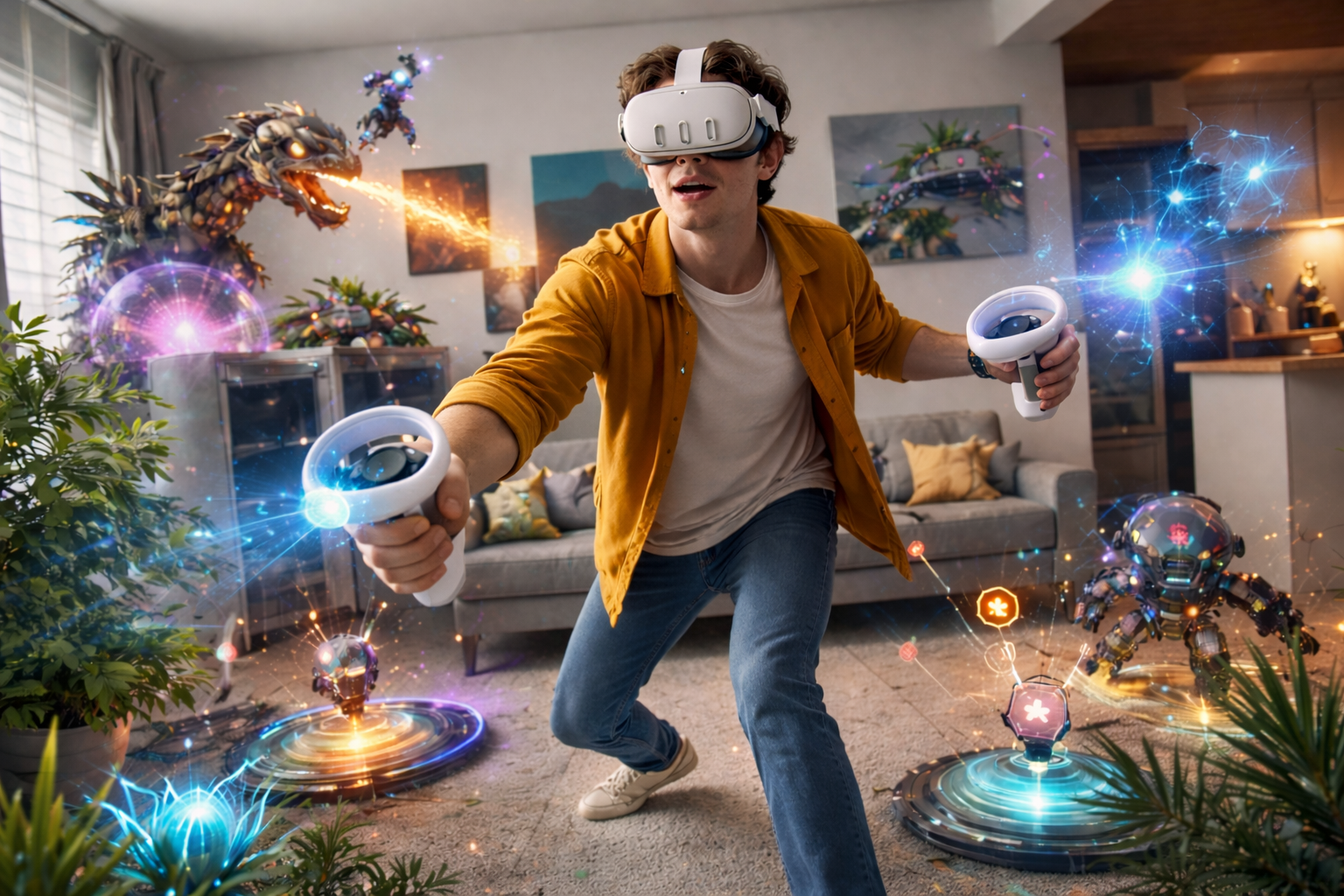
Virtual reality and mixed reality technologies will become lighter, more affordable, and more accessible. Instead of sitting in front of games, players will step inside them. Movement, presence, and physical interaction will become core parts of gameplay.
This shift will change not only how games look, but how they feel. Fear, excitement, tension, and wonder will become more physical and more immediate.
Gaming will no longer be something you watch.
It will be something you experience.
Players Become Co-Creators
One of the most transformative changes ahead is the role of the player.
Players no longer want to simply consume content. They want to participate, create, and shape the worlds they love. By 2030, this expectation will be central to game design.
Future games will provide powerful creation tools that allow players to design levels, characters, stories, and entire experiences. Communities will form around building and sharing content. Games will grow and evolve through the creativity of their players.
The most successful games will not be the ones with the most content at launch. They will be the ones that empower players to create endless new experiences.
Games will become platforms rather than products.
A World Without Hardware Barriers
For years, high-end gaming has been limited by expensive hardware. Not everyone could access the latest consoles or powerful PCs.
Cloud gaming is set to change that.
By 2030, players will be able to access high-quality games from almost any device. Phones, laptops, tablets, and smart TVs will all become viable gaming platforms. The power of remote servers will replace the need for expensive local hardware.
This shift will bring millions of new players into the gaming ecosystem and make the audience for games more global than ever before.
The industry will grow not just in size, but in diversity.
Games as Social Spaces
Gaming has already become one of the most social forms of entertainment. But in the coming years, it will evolve into something even larger.
Games will become digital gathering spaces where people meet, collaborate, celebrate, and explore together. Friends will attend events, build worlds, and create memories inside virtual spaces.
The line between gaming, social media, and digital life will continue to blur.
Games will not just entertain people.
They will connect them.
A More Global Development Landscape
The future of game development will be shaped by global collaboration. Remote work and outsourcing have already begun transforming how studios operate.
By 2030, development teams will be more international than ever before. Talent from across the world will collaborate seamlessly, bringing diverse perspectives and skills into every project.
This global approach will lead to richer ideas, faster production pipelines, and more innovative experiences.
The industry will become more connected, more inclusive, and more creative.
Looking Ahead
The future of game development is not defined by a single technology or trend. It is defined by the convergence of many changes happening at once.
Games will become living worlds.
Developers will gain powerful new creative tools.
Players will become creators.
Barriers to entry will fall.
And digital experiences will become more immersive and more social than ever before.
By 2030, games will not just be part of entertainment. They will be part of everyday digital life.