Why the World’s Smartest Game Studios Are Outsourcing to India
(And the Ones That Aren’t Are Probably Paying Too Much)
Let’s skip the pleasantries and get straight to it. You’re a game studio. You have a vision, a deadline, and a budget that has absolutely no intention of matching that vision. Sound familiar? Welcome to the global game development reality.
The question isn’t whether to outsource anymore. That ship sailed years ago. Studios of every size, from scrappy indie teams in Stockholm to AAA publishers in Los Angeles, outsource art, development, QA, animation, and more. The real question, the one that actually matters to your bottom line and your release date, is WHERE you outsource to.
And if your answer isn’t India, allow us to respectfully, enthusiastically, and with nearly two decades of battle-tested experience, make the case.
First, Some Numbers Worth Bookmarking
We know. Data! In a blog about games! But bear with us, because these numbers tell a genuinely compelling story.
Game developers in the US bill at $70 to $130 per hour. Eastern Europe, often touted as the ‘cost-effective’ alternative, runs $35 to $70/hr. India? A deeply skilled senior developer at a studio like Zatun comes in at a fraction of that, consistently delivering work that holds its own on any global stage.
India is one of the world’s most dominant IT outsourcing destinations, a reputation built over 30+ years of accumulated infrastructure, talent pipelines, and hard-won global trust. That’s not a fluke. That’s a track record.
India produces over 1.5 million engineering graduates annually and the gaming sector is pulling from that same deep, well-trained pool.
The Indian gaming market hit $3.8 billion in FY24 with 23% year-on-year growth and over 488 million online gamers. When your outsourcing partner lives inside one of the world’s most explosive gaming cultures, they don’t just build games. They get them.
Now, combine that talent depth with cost efficiency, and you have what serious studios call a competitive edge. We just call it Tuesday.
“But What About Eastern Europe?”
A fair question. Poland, Ukraine, Romania. These are genuinely skilled outsourcing regions, and we’d never dismiss them. But let’s look at the full picture:
- Eastern European rates have been creeping upward. Poland now runs $40 to $56/hr for standard development roles. That’s increasingly closer to Western rates than it used to be.
- The ongoing situation in Ukraine has introduced real delivery risk. Many studios have had to scramble mid-project when war disrupted operations.
Talent pools in Eastern Europe, while excellent, are comparatively smaller. Scaling up a team quickly is harder. - India, by contrast, offers the deepest talent bench on earth and the infrastructure has matured enormously. This isn’t the India of 2005. Today’s Indian game studios are delivering full-cycle AAA work, VR titles, Web3 games, and multi-platform launches.
It’s not about geography being better or worse. It’s about value, reliability, and depth. On those metrics, India wins and has been quietly winning for years.
The Talent Story Nobody Talks About Enough
Here’s what surprises most new clients when they work with us: the quality of creative problem-solving coming out of Indian studios.
India has a film, animation, and visual storytelling heritage that is genuinely world-class. Bollywood aside (we know, we know), India’s animation and VFX industry has served Hollywood, European broadcasters, and global game publishers for decades. That creative DNA runs through the development culture here.
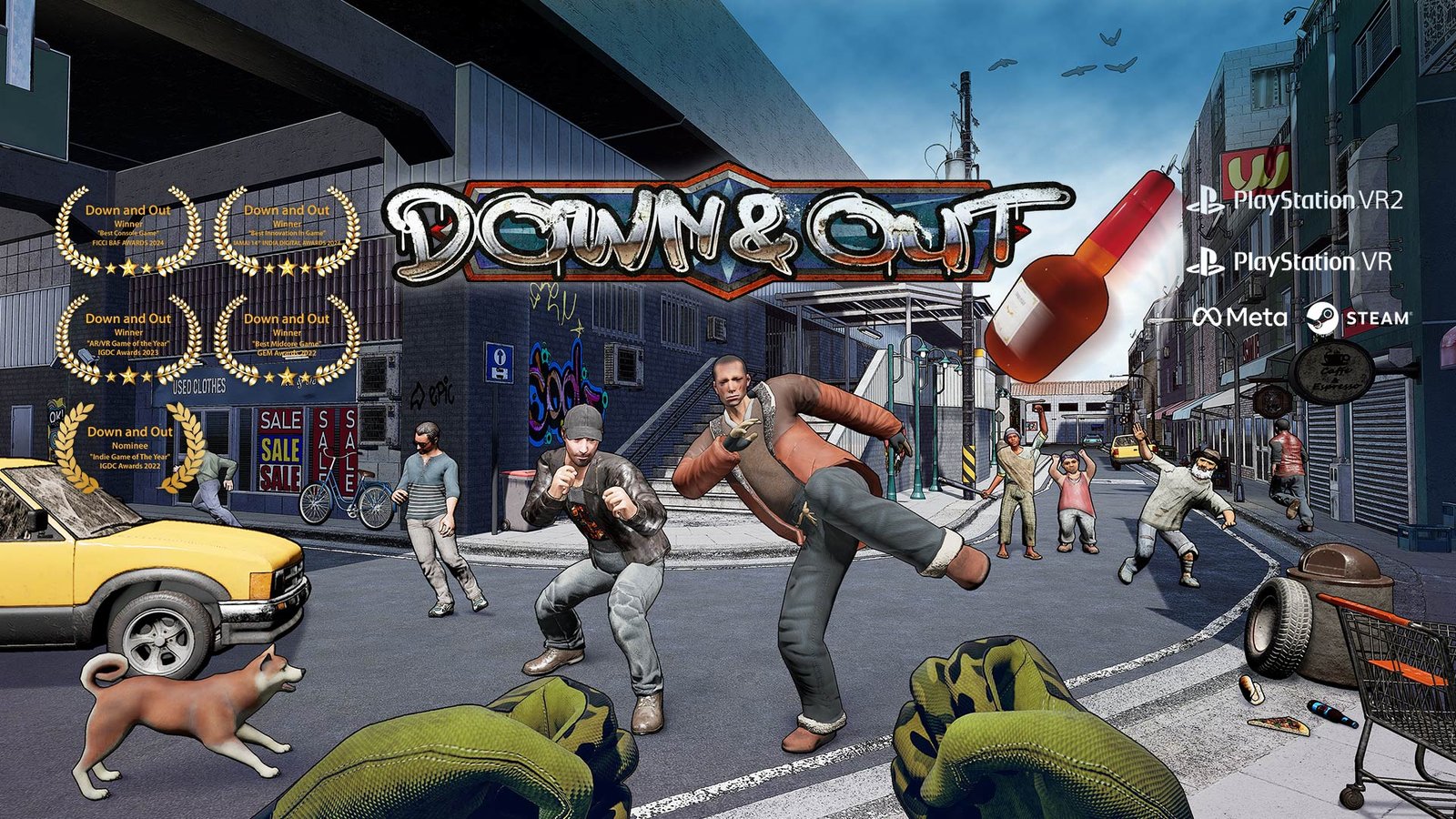
Our teams at Zatun work across Unity, Unreal Engine, AR/VR, Web3, blockchain, mobile, console, and PC. We’ve delivered everything from VR boxing games (Down & Out, an award-winner by the way) to precision-sniper mechanics (Sniper Rust VR), full-scale horror narratives (SCP: Project Pneuma, coming to PlayStation, Xbox, and Steam), and Web3 kart racing (Kartboard Dash, with wallet-free onboarding and evolving NFT karts, because we like staying ahead of the curve).
That’s not a portfolio you build by accident. That’s 18 years of craft.
The English Factor. Underrated and Overdue for Credit.
India is the second-largest English-speaking country in the world. This matters more than most outsourcing guides admit.
Miscommunication is the silent killer of outsourced projects. Briefs get lost. Revisions multiply. Scope creep sneaks in through badly translated specs. When your outsourcing partner thinks in English, natively, fluently, contextually, none of that happens. Game design docs, technical briefs, feedback loops, milestone reviews: they’re all smoother. A lot smoother.
At Zatun, our client relationships have spanned UK studios, US publishers, Australian cricket game companies, and European developers, all communicating without friction. The CEO of Matrix Games called us “dedicated and thorough.” Visual Concepts (2K) said we delivered under “challenging circumstances” with “high quality.” Playwing called us “highly responsive.”
That’s not just good work. That’s good communication, making the work land right.
Time Zones: The Objection That Isn’t One Anymore
“But the time zones!” we hear you say. Look. India’s IST (UTC+5:30) means a meaningful morning overlap with European studios and a solid async workflow with North American teams. With project management tools, disciplined delivery cycles, and a team that understands how to work globally, timezone gaps stop being a problem and start being an advantage. Your outsourced team works while you sleep.
We’ve been doing this since 2007. The calendar hasn’t broken yet.
Stability, IP Protection, and the Boring Stuff That Actually Matters
FIndia has a robust legal framework around intellectual property. NDAs are enforceable. Contracts are solid. Data protection policies are taken seriously by professional studios.
At Zatun, client confidentiality isn’t a checkbox. It’s a core operating principle. We’ve protected IP for publishers across four continents. Our clients’ ideas stay their ideas.
And unlike some outsourcing regions that have seen political instability, infrastructure disruption, or sudden talent flight, India’s IT and creative sector has remained remarkably stable and has continued to grow through every global upheaval of the past two decades.
Proof: Games Built Right Here, in India
We don’t just outsource other people’s dreams. We build our own. And we think that’s a crucial differentiator.
A studio that only takes outsourcing work has never felt the weight of launching its own IP. The market pressure, the design iteration, the platform certification, and the post-launch community. We have repeatedly.
The Legend of Vraz (2010): India’s first real attempt at an original game IP with global ambitions. We were figuring it out before there was a playbook. It set the tone for everything that followed.
Sniper Rust VR: Award-winning precision VR sharpshooting across major headsets. Oculus Quest, PSVR, Steam VR, HTC Vive. Multiple platforms. Multiple certifications. All delivered.
Down & Out: Immersive VR street brawling. Multiple award nominations. A full-cycle development project delivered with the kind of polish that gets noticed on the festival circuit.
SCP: Project Pneuma: Our most ambitious title yet. A psychological survival horror game coming to PlayStation, Xbox, and Steam, built on licensed SCP universe lore, packed with atmospheric dread, and absolutely not for the faint-hearted. This is console-level development, built in India.
Kartboard Dash: A Web3 kart racer that blends the joy of Mario Kart with blockchain progression. Wallet-free, fun-first, and already live on Telegram with a PC launch rolling out. We designed the economy, the NFT kart system, the DAO-driven track modding, and the full visual identity.
These aren’t tech demos or portfolio fillers. These are actual games, shipped, played, and recognised. When you work with Zatun, you’re working with a team that has skin in the game. Literally.
What Zatun Actually Brings to Your Project
Here’s the honest version of what working with us looks like:
- Game Art Outsourcing: 3D characters, environments, vehicles, concept art, AAA assets, mobile art, UI/UX. From a single asset to an entire production pipeline.
- Full-Cycle Game Development: Unity and Unreal, PC, console, mobile, VR, AR, XR, Web3. Concept through launch, with proper QA and platform certification.
- Co-Development: Embedded teams that slot into your existing pipeline. Your lead creative is our execution muscle.
- Game Porting: Multi-platform delivery without the multi-platform headache.
- Animation: 2D, 3D, motion capture. Character animation that breathes life into whatever world you’re building.
- Level Design: Environment logic, pacing, player flow. The invisible work that makes games feel right.
We don’t do one thing well and hope you don’t notice the gaps. We do the whole thing and we’ve been doing it for 18 years with clients from Visual Concepts (2K), Matrix Games/Slitherine, LeapFrog Enterprises, Playwing, and Stick Sports, among others.
So. Why India?
Because the math works. Because the talent is real. Because the communication is clear. Because the legal framework is solid. Because studios like Zatun have spent nearly two decades proving that Indian game development doesn’t just compete with the world. It wins.
The global gaming market is heading toward $200 billion. Every studio that wants a piece of it needs to be ruthlessly smart about how they build. Building in India, with a partner who has the portfolio, the people, and the passion to match, that’s not a compromise. That’s a strategy.
“Zatun has worked on a number of projects for us since 2014. They are dedicated and thorough and take the time to research the style and technical details required on the complex modeling and artwork that we require.” — JD McNeil, CEO, Matrix Games/Slitherine, UK
“I can’t say enough about how easy it was to work with Zatun. We came to them on short notice, with a fairly complex pipeline and unique technical needs, but Zatun consistently delivered high quality work.” — Alex Jones, Producer, Visual Concepts (2K)
Ready to Build Something Legendary?
Zatun is based in Ahmedabad, India and we’re partnered with studios across the US, UK, Europe, and Australia. We’ve been at this since 2007 and we’re not slowing down.
Whether you need an art team for three months or a full-cycle development partner for three years, let’s talk.