3D Modeling in the Gaming Industry: A Practical Look at Where We Are in 2026
3D modeling has always been at the heart of modern games. It shapes the characters we connect with, the worlds we explore, and the objects we interact with. As we move through 2026, the way these models are created is changing quickly not because the fundamentals have changed, but because the tools have become smarter and the expectations far higher.
Below is a straightforward look at how 3D modeling works, where it’s used, how it’s evolving, and how Zatun Game Studio fits into the picture.
The Foundation of 3D Modeling
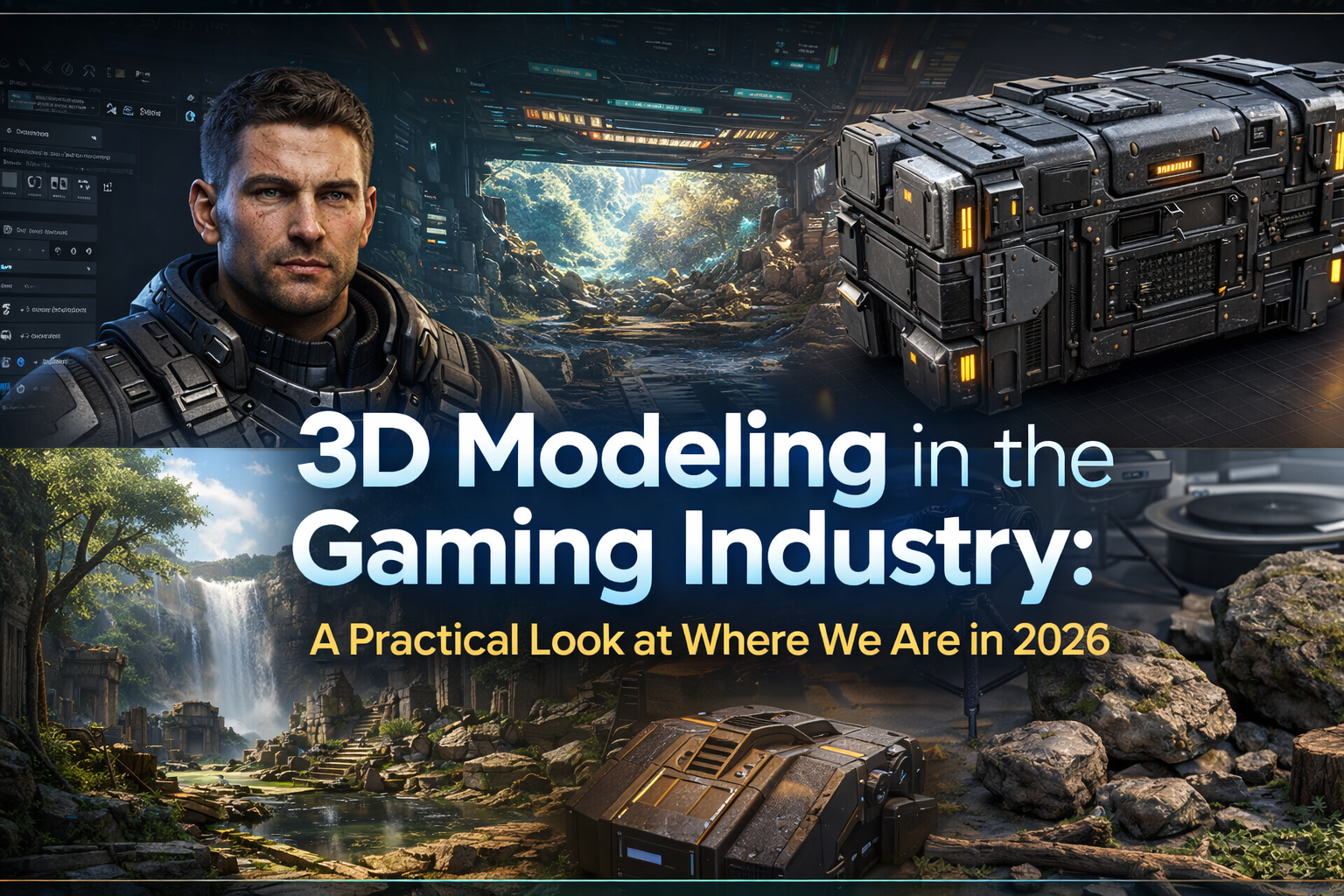
Our 3D modeling is simply building a digital object that feels real enough to fit inside a game world. Artists use polygons, textures, and lighting to shape characters, props, buildings, and entire environments.
A good model usually depends on:
- Clean Geometry.
- Proper Topology.
- Believable Textures.
The Role of 3D Modeling in Game Development
3D models aren’t decoration; they’re the building blocks of the experience.
They determine how a world looks, how characters move, and how the game feels.
- Characters and creatures come alive because of their models.
- Worlds feel immersive because environments are properly built.
- Weapons, props, vehicles — all rely on detailed modeling to look and behave convincingly.
- Even cutscenes and visual storytelling rely heavily on high-quality 3D art.
Without good modeling, the rest of the game struggles.
3D Model Creation for Games: A Simple Step-by-Step View
The actual process isn’t magic. It’s a series of clear steps that artists follow:
- Concepts and references – gathering visual direction.
- Blocking – rough shapes to check size and proportions.
- High-poly sculpting – adding all the details.
- Retopology – making a clean, game-friendly version.
- UV mapping – preparing the model for textures.
- Texturing – painting materials and surface details.
- Baking – transferring details from high-poly to low-poly.
- Rigging and animation – only if the model needs movement.
- Engine setup – getting it ready for Unreal, Unity, etc.
Game-ready modeling is really a mix of art and technical discipline.
Different Applications of 3D Modeling in the Gaming Industry
2026 isn’t about replacing artists — it’s about supporting them with better tools.
Here’s what’s happening now:
- AI is helping with repetitive work, like generating base meshes or suggesting textures.
- Procedural tools are speeding up world-building.
- Lighting improvements (especially real-time ray tracing) are raising the visual bar.
- Asset pipelines are becoming cross-platform so the same model works on console, PC, VR, or mobile.
- Cloud-based workflows make remote collaboration normal.Instead of making modeling easier, these tools allow artists to focus more on creativity and less on busywork.
How Zatun Game Studio Helps With 3D Modeling
Zatun has made a name for itself by supporting studios that need reliable, consistent game art. Their approach is practical: produce good work, meet deadlines, and understand what the client’s game actually needs.
What they typically help with:
- Character and creature modeling (realistic, stylized, fantasy, sci-fi)
- Environment modeling, from props to full world assets
- Weapons, vehicles, and other gameplay objects
- Texturing using modern PBR workflows
- Rigging and animation when needed
- Optimization for Unreal, Unity, mobile, and VR
They’re also comfortable scaling teams depending on the project — something developers appreciate when deadlines get tight.